







We are delighted to present work by artists associated with Graphic Studio Dublin at the World Trade Centre, Jakarta on behalf of the Embassy of Ireland to Indonesia.
Ireland’s Eye, 2026
ISA Art, Lobbt WTC 2, Setiabudi, South Jakarta, 1st -24th April
Mata Irlandia 2026
The imprint of the Irish Landscape
Mata Irlandia 2026 brings together five Irish artists whose works are bound by a deep-seated preoccupation with the Irish landscape, its organic cycles, and the layered histories embedded in its soil. Stretching across generations from the late Tony O’Malley’s spiritual abstractions to recent graduate Charlie Dineen’s lens-based explorations of Irish myths, the exhibition tells us about the cultural imprint of life on the landscape of Ireland today.
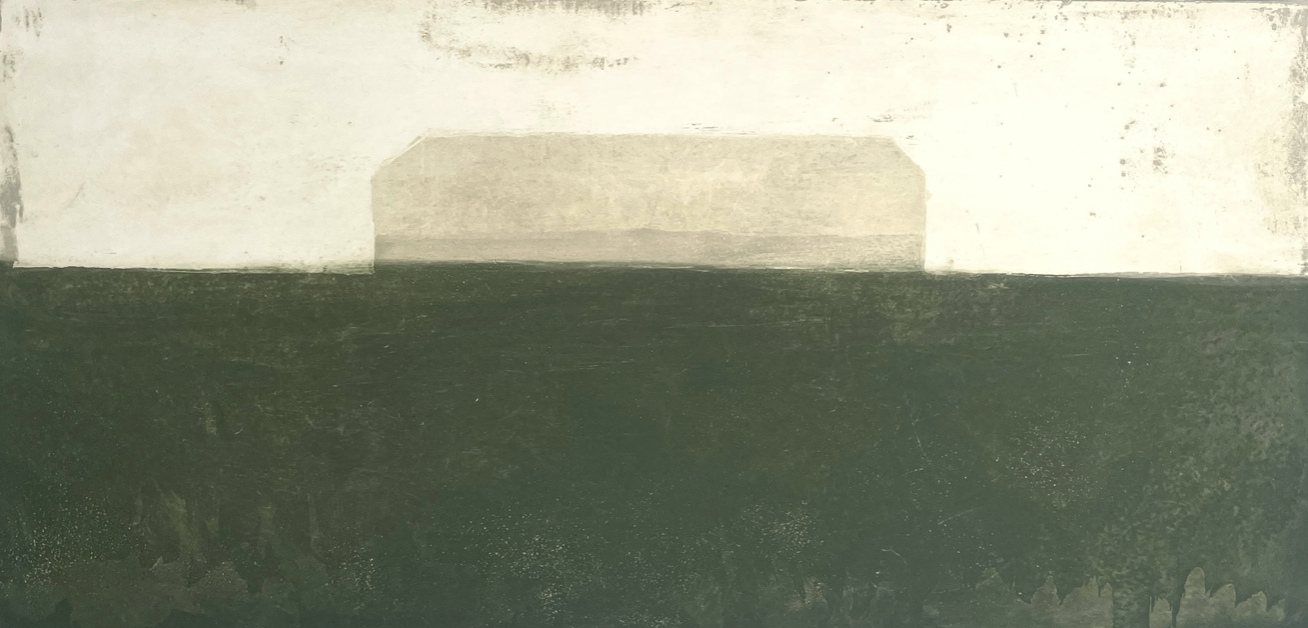
At the heart of the exhibition is a shared fascination with the ‘spirit of place’. The late great Irish artist Tony O’Malley is a spiritual father figure for Irish art. One of a pioneering generation of Irish artists who merged the developments of post war abstraction with a profoundly Irish sense of place, in his case , the medieval world of his native County Kilkenny. Using abstraction to explore the ‘essence’ of historical locations such as Jerpoint Abbey. O’Malley was remarkably open to experimentation in different media. He created a large body of original prints at Graphic Studio Dublin over many years, mainly carborundum – a printmaking method favoured by painters for capturing painterly gestures and textures. Tony O’Malley’s lyrical works are deeply connected to the Irish landscape, capturing the character and rhythm of nature. His gestural forms transcend physical representation, portraying a place not only seen but felt and remembered—an essence that goes beyond the visible.
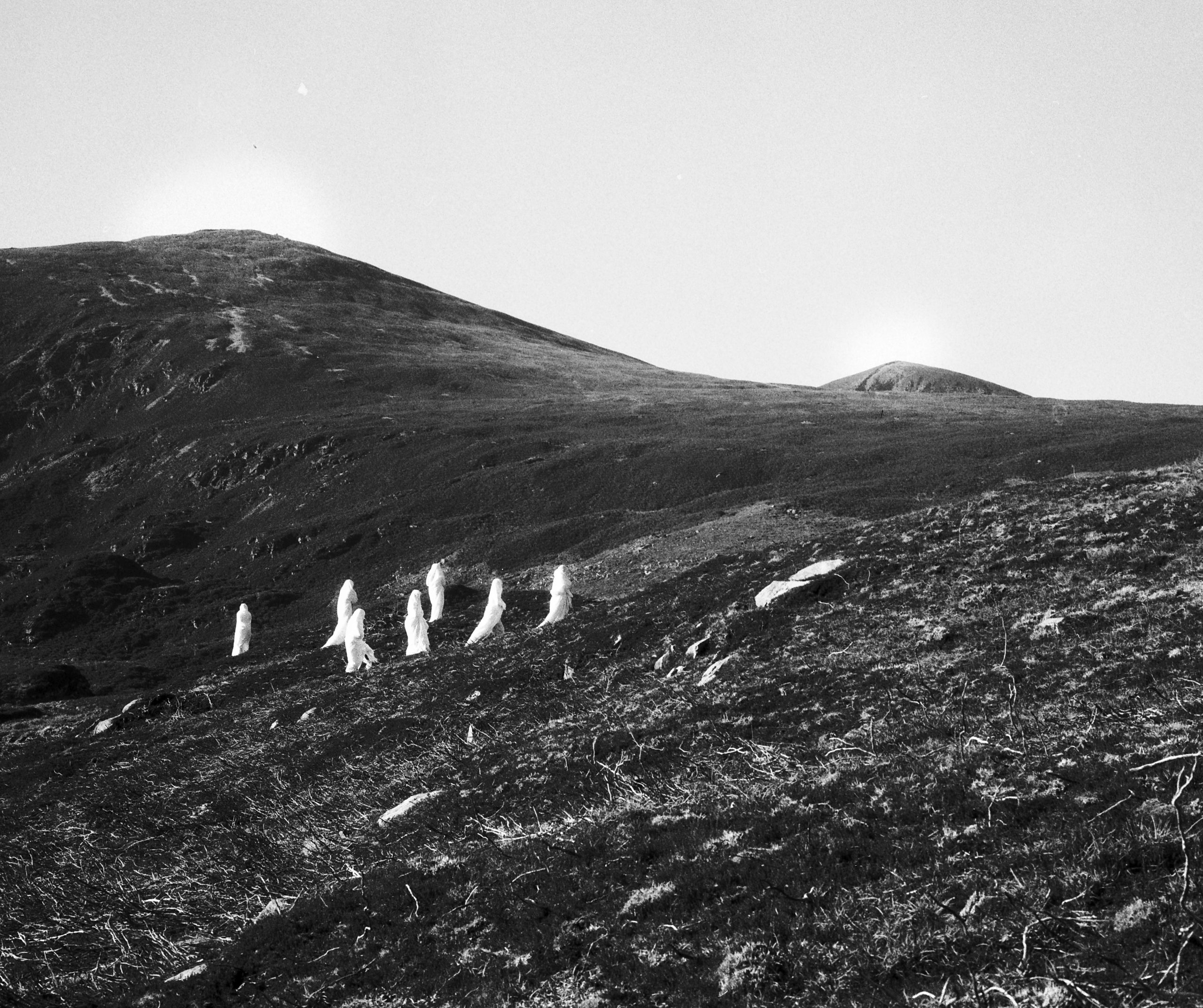
Charlie Dineen’s film The City Beneath Me 2025 was filmed in the ancient landscape of the Paps of Anú in County Kerry. Anú is the Celtic goddess of fertility and was revered by pre-Christian agricultural communities as the guardian of cattle and health. In those pre-Christian times, the sacred mountains were venerated as the source of wellbeing for the surrounding lands and lives of the people. On each summit sits a prehistoric cairn housing cist type burials. The annual springtime pilgrimage to these twin peaks was in devotion to Mother Earth Anú. The City Beneath Me reactivates these Druidic rituals on the barren windswept terrain of the Paps’ slopes. In returning to his ancestral Kerry home in dawn’s early light, Dineen’s reimagining is honouring the disappearing traditions of summoning the spirits of ancestors who permeate the thin air between worlds on this holy ground. Dineen uses analogue film and digital software to interweave the terrain with the ‘mythic history’, suggesting that the land is a vessel for the stories of those who walked before us. The human sounds in Dineen’s works are ancient, interwoven with the mountain winds and geological time.
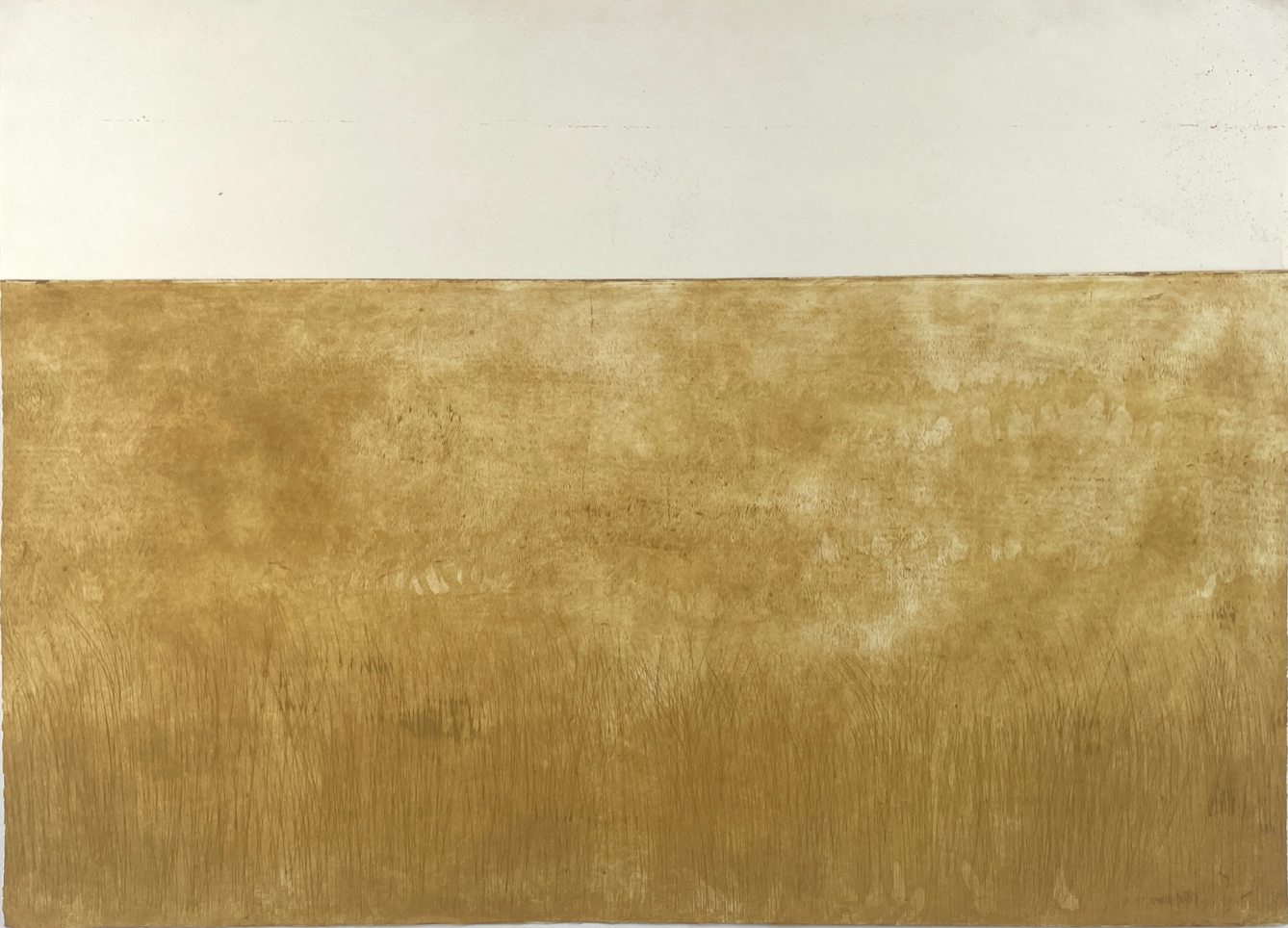
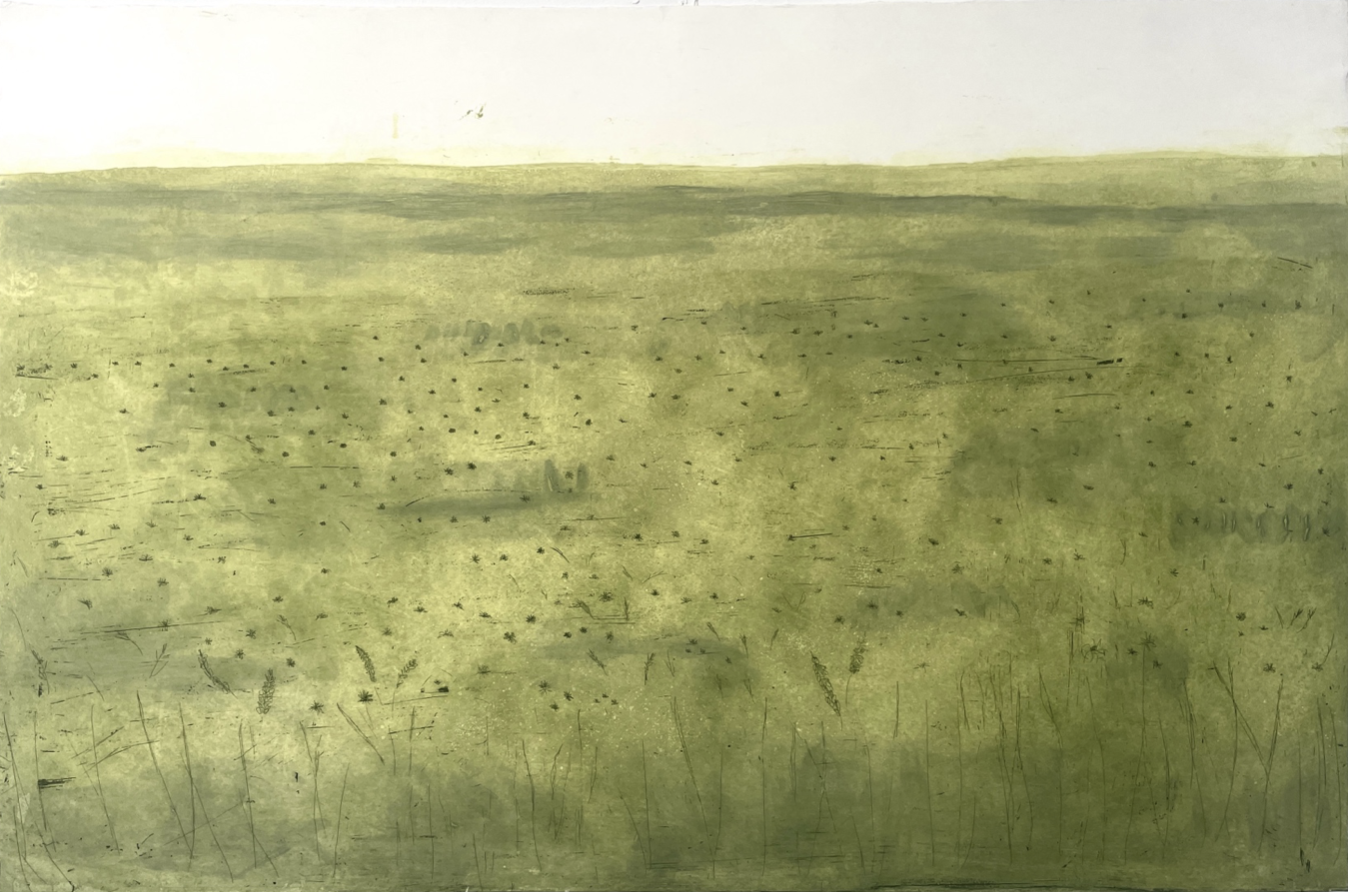
Cliona Doyle’s botanical etchings and carborundum prints offer a meticulous focus upon Irish flora. Her depictions of Irish native hawthorn, orchard fruits, and wild orchids are more than just still life; they are celebrations of the Irish seasons and the quiet, persistent beauty of the natural world formed by the Irish temperate climate. Her work is concerned with the presence and the experience of nature. She frequently works outside en-plein air, creating copper sulphate etchings and carborundum plates. She has also pioneered the use of eco-friendly materials and etching techniques in her new body of work, using copper sulphate or blue stone to etch plates in situ. This reflects her concern for our shared environment.
For Gwen O’Dowd the Irish landscape provides both physical form and visceral force to her works. Using a palette that vibrates with the shifting light of the Atlantic, O’Dowd engages with the elemental—we are standing at the edge of an ocean, the friction of the sea against the shore, water and rock, and the deep fissures of the earth—transforming physical geography into powerful, emotive abstractions. She responds to the intensity and repetition of the action of water over centuries – rivers, glaciers, oceans – and how they carve their presence into the landscape, an interminable erosion that hollows out channels and spaces over time. She is known for her exploration of print, an opportunity for her to experiment and push the traditional boundaries of her expression, especially carborundum printing techniques, taking advantage of the grittiness of the material to produce works with an almost tangible immediacy. She would demure labels of abstract or figurative for her work, describing them instead as intellectual, emotional and observed responses to nature and the environment.
Robert Russell is an artist and renowned master printmaker who draws on the deep literary and historical echoes which are found everywhere in Irelands urban locations. His technique creates very precise yet atmospheric scenes of these significant places, such as the dawn and dusk light found in The Phoenix Park, Europe’s largest enclosed urban space. Russells work invites us to walk in a kind of meditation, in those same timeless wooded places with writers such as Bram Stoker, Oscar Wilde and James Joyce, these works have a timeless realism.
The Graphic Studio, Dublin, where the work in this exhibition was created, was founded in 1988 and is Irelands leading Fine Art printmaking facility. The technical process of ‘pressing’ an image into paper, in many senses reflects the way history and nature are imprinted onto the Irish landscape and consciousness. This exhibition invites the viewer to look at Ireland’s physical and psychic geography, from its wild Atlantic edge, to its mountains, medieval monasteries, parklands and city gardens.
Mark Joyce 2026
The Artists
Tony O’Malley 1913-2003, is celebrated as one of the major figures in Irish 20th Century Art. He was born in Co Kilkenny and worked as a bank clerk before becoming a full-time artist, from the age of 35. Self-taught, he moved to St. Ives in Cornwall in 1960, where he came into contact with many of the leading artists in the community, including Terry Frost, Peter Lanyon, Patrick Heron, Bernard Lynch and Bryan Wynter. In 1973 O’Malley married Canadian artist Jane Harris. Through the mid-70s they regularly visited the Bahamas, Lanzarote, and The Isles of Scilly, that inspired an infusion of vibrant colour in his work. In 1990 Tony O’Malley and his wife Jane O’Malley moved back to Ireland. In 1993 Tony O’Malley was elected a Saoi of Aosdána. His works are represented in the most significant Irish public and private collections, and in important international collections of Irish art. The Irish Museum of Modern Art presented a posthumous survey retrospective of his work in 2005/2006.
O’Malley was remarkably open and eager to experiment with various forms of expression in different media. He created a large body of original prints at Graphic Studio Dublin over many years through the studio’s visiting artist programme. His most chosen mode of expression at Graphic Studio being carborundum – a printmaking method often favoured by painters, that is capable of capturing painterly gestural movement, texture and brush strokes. Tony O’Malley’s lyrical carborundum pieces are deeply connected to the landscape, capturing the character and rhythm of nature. His gestural forms transcend physical representation, portraying a place not only as it is seen but as it is felt and remembered—an essence that goes beyond the visible.
Cliona Doyle was born in 1968 and attended the National College of Art and Design in Dublin from 1987 to 1991. She graduated with an Honours degree in Fine Art Printmaking. Doyle is a member of the Graphic Studio, Dublin. She has exhibited nationally and internationally. Working principally in carborundum and etching.
Her work has been exhibited in the following Institutions – The National Gallery, Dublin, The Hugh Lane Gallery, Dublin, The Chester Beatty Library, Dublin, The Royal Hibernian Academy, Dublin, The Original Print Fair London, and The Woolwich Original Print Fair, London. She teaches etching classes and drawing workshops. She is represented in major collections including AIB, OPW, National Gallery of Ireland and Chester Beatty.Cliona Doyle is perhaps best known for her large-scale carborundum depictions of trees. Her work is concerned with presence and the experience of nature. She frequently works outside en-plein air, creating (copper sulphate etchings and/ or/ carborundum plates) that she later prints at Graphic Studio Dublin. Her work takes inspiration from antiquities, the colour theme on a Ming vase, the surface of a fresco by Fra Angelico or the negative space on a Japanese Screen. Cliona Doyle has explored eco-friendly materials and etching techniques in this new body of work, using copper sulphate or blue stone to etch plates in situ. This reflects her concern for our environment.
‘My work explores equilibrium and transience. I am interested in patterns and recurrent forms which occur in nature. My work explores the symbiotic relationship between plants and animals. As Albert Einstein said – look deeply into nature and you will understand everything better.’ – Cliona Doyle
Gwen O’Dowd, was born in Dublin and studied at the National College of Art & Design, and began exhibiting in the mid-1980s. She has exhibited regularly in Ireland and Britain, as well as continental Europe and North America. O’Dowd is one of Ireland’s foremost contemporary artists; she has received many awards and prizes and is a member of Aosdana.
”Gwen O’Dowd has always experimented with materials and methods to develop a language of expression to enable the surfaces and textures of her work to coalesce with her interpretation. She is known consequently for her exploration of print, which has been significant in providing her with opportunities to experiment and push the traditional boundaries of what her media has to offer. Since 1985, she has been working with carborundum printing techniques, taking advantage of the grittiness of the material to produce works with an almost tangible immediacy.
As an artist, O’Dowd seeks to express the emotion evoked by the direct experience of nature, such as the startling impact of a wave crashing against the obdurate surfaces of a rocky shoreline. She responds to the intensity and repetition of the action of water over centuries – rivers, glaciers, oceans – and how they carve their presence into the landscape, an interminable process of erosion that hollows out channels and spaces over time. Her study visits to environments range from the Grand Canyon in Arizona and the icefields and glaciers in Canada, to the coastlines of the west of Ireland.
O’Dowd’s representations appear sublime in addressing expanses of time and space, but they are rooted in an acute awareness of contemporary events and concerns that express or threaten the pristine power evoked in her imagery.” – Dr. Yvonne Scott, Director, Triac (Trinity College Irish Art Research Centre)
Robert Russell is a Dublin-based artist and Master Printmaker, recognised as one of Ireland’s senior leading figures in contemporary printmaking. He began his formal training at the Dún Laoghaire Institute of Art, Design & Technology in 1979, specialising in sculpture while also exploring painting and print. His early achievements include winning the Taylor Art Competition Prize for Painting in 1980, as well as receiving both the Alfred Beit Award and the Norah McGuinness Award. He completed his studies in 1993.
Russell’s work spans multiple disciplines but is anchored in a deep commitment to the art of printmaking. His prints have been acquired by major institutions, including the National Gallery of Ireland, the Chester Beatty Library, and the British Library.
Since 2007, Russell has served as Studio Director and Master Printer at Graphic Studio Dublin, where he has mentored and collaborated with numerous artists. His technical knowledge encompasses a broad range of traditional and experimental printmaking techniques, including etching, screenprint, woodcut, linocut, mezzotint, carborundum, and photo intaglio. Through his work, he continues to expand the creative potential of the printed image.
Cora Commins works across a number of medium-printmaking, video, sculpture and publications. Her research interest has been exploring various spaces of retreat and isolation, particularly the aesthetic and psychological appeal of civic horticulture, golf courses, lighthouses, islands and the digital landscapes of computer games. Recent research has involved the promotion and development of printmaking and publication under the working title of Quadrangle Press. Projects have included Parallels 2015- a publication in partnership with The Mountains to Sea Festival and IADT students and staff , and The Foot 2014 – a collaborative publication with sculpture students at IADT.
Cora has worked at Institute of Art Design and Technology, Dun Laoghaire, Dublin (IADT) since 2004, lecturing on the BA in Art. She is a member of Graphic Studio Dublin. As well as a member of Visual Artists Ireland and was a board member of the Blackchurch Printstudio. She was awarded studio residency at IMMA 2004 + TBG+S 2010. Curation Projects include – Eight Part Response, Visual, Carlow 2013, What Hiver Studio 8, TBG+S 2009, Elsewhere From Here Workroom Space, Dublin 2003.
Charlie Dineen is a recent graduate of IADT Dublin. Based in Dublin, he is an artist and film maker working primarily with multiformat analogue photography and film. He is a recipient of the RDS Graphic Studio Dublin Emerging Visiting Artist Award.
His work spans abstract and conceptual approaches, street photography, documentary, and self-portraiture. Central to his practice is a deep belief in the enduring magic of analogue processes and the creative possibilities that are carried through an unbroken chain of light in the darkroom.
Dineen’s evolving film work is grounded in the same sensibility that defines his photographic practice and demonstrates a deep understanding of the medium. Layered sound and visuals are elegantly and emotively interwoven to create work that is atmospheric, resonant and distinctive.


